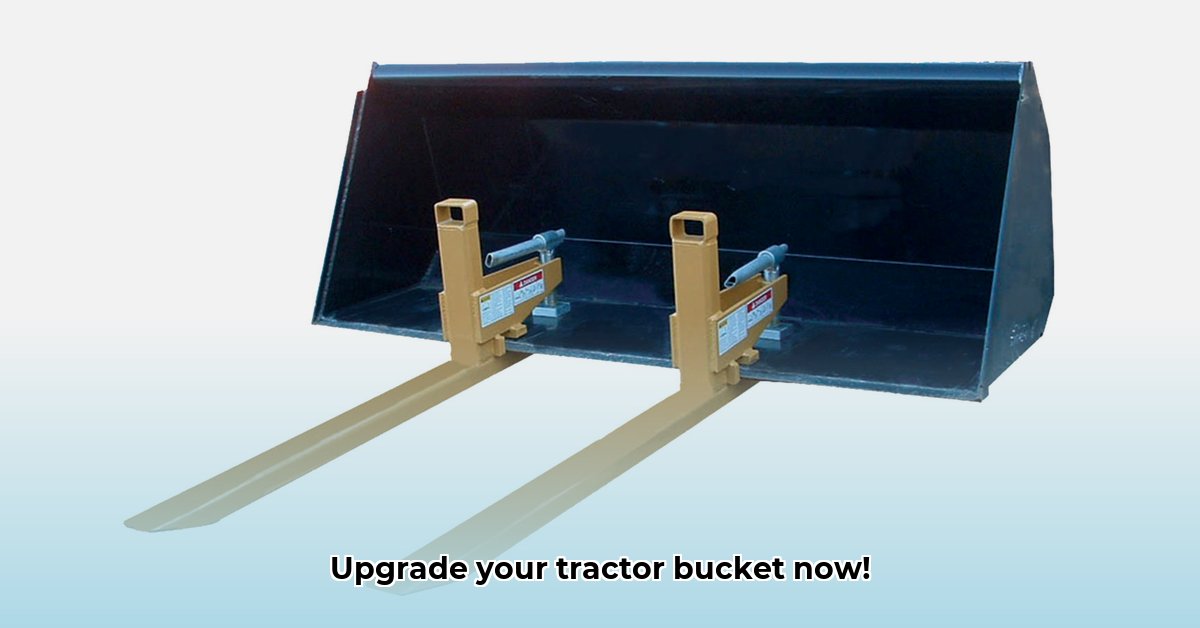
Choosing the right clamp-on pallet forks can significantly boost your farm's efficiency and safety. This comprehensive guide provides a step-by-step approach to selecting, installing, operating, and maintaining these essential attachments. We'll cover crucial factors, including load capacity, dimensions, material, safety features, and compatibility, ensuring you make an informed decision. For more information on tractor attachments, check out this helpful resource.
Choosing the Right Forks: A Critical Decision
Selecting the perfect clamp-on forks for your tractor bucket requires careful consideration of several key factors. Let's delve into each one:
Load Capacity: Safety First
This is paramount. The forks' rated load capacity must significantly exceed the heaviest load you anticipate. A safety margin is crucial. For instance, if you regularly move 1500-pound pallets, consider forks rated for at least 2000 pounds—or even higher to ensure sufficient safety. Don't underestimate this; underestimating load capacity can lead to equipment damage and serious injury.
Fork Length and Width: Optimizing Handling and Stability
Longer forks extend reach but might compromise stability, especially with heavier loads. Wider forks generally enhance stability, particularly useful when lifting heavier or awkwardly shaped materials. Visualize how your typical loads will fit; sketching diagrams can clarify optimal dimensions for your needs.
Material and Construction: Durability Matters
High-quality steel alloys offer superior strength and longevity. Look for robust welds and reinforced areas, signifying superior construction. While cheaper forks might seem appealing initially, they often prove more costly in the long run due to repairs or premature replacement. Consider this a long-term investment in safety and productivity.
Safety Features: Protecting Your Investment and Yourself
Prioritize safety features. Secure locking mechanisms prevent accidental slippage, while stabilizer bars enhance stability. Consider integrated safety sensors for an added layer of protection. These additions are a smart investment that can prevent serious accidents and costly damage. Investing in these features is a worthwhile expense.
Compatibility: Ensuring a Perfect Fit
Before purchasing, verify complete compatibility with your tractor bucket's size and attachment system. Double-check your measurements—inaccurate fit leads to instability and potential accidents. A poorly fitting fork is a significant safety hazard.
Brand Reputation and Warranties: Choosing Reliability
Reputable brands often equate to superior quality control and better warranties. Read online reviews and compare warranty offerings. A strong warranty provides peace of mind and acts as a safeguard against unexpected issues.
Installation Guide: A Step-by-Step Process
Installing clamp-on forks is typically straightforward, but safety remains paramount. Always refer to the manufacturer’s specific instructions.
Pre-Installation Inspection: Thoroughly inspect the forks, ensuring no damage or defects. Check all pins and locking mechanisms.
Precise Positioning: Carefully align the forks with your bucket's attachment points. Accuracy is critical.
Secure Attachment: Use the provided hardware to firmly attach the forks. Ensure a tight, secure fit—no movement or looseness is acceptable.
Test Lift: Perform a test lift with a light object to confirm secure connection and functionality.
Final Safety Check: Double-check all safety mechanisms before lifting anything heavy.
Operating Instructions: Safe and Efficient Handling
Operating your clamp-on forks requires a mindful approach.
Careful Loading: Ensure even load distribution and stability before lifting.
Avoid Overloading: Never exceed the rated load capacity. Overloading causes equipment damage and potential accidents.
Smooth Maneuvering: Operate smoothly; avoid jerky movements or sharp turns, especially with heavy loads.
Regular Load Checks: Regularly check load security, especially on slopes or uneven terrain.
Maintenance and Troubleshooting: Extending Fork Lifespan
Regular maintenance extends the lifespan of your forks.
Regular Inspection: Inspect for wear, tear, or damage after each use. Address minor issues promptly.
Cleaning and Lubrication: Keep moving parts clean and lubricated to prevent rust and corrosion.
Prompt Repairs: Repair or replace damaged parts immediately. Ignoring problems can lead to accidents.
Comparison Table: Key Specifications at a Glance
| Model | Load Capacity (lbs) | Fork Length (in) | Fork Width (in) | Price Range ($) | Key Safety Features | Warranty (Years) | Manufacturer |
|---|---|---|---|---|---|---|---|
| Model X | 2500 | 48 | 24 | 600-700 | Locking pins, stabilizer bars | 1 | Acme Corp |
| Model Y | 3500 | 60 | 28 | 800-950 | Locking pins, stabilizer bars, sensors | 2 | Beta Co. |
| Model Z | 2000 | 36 | 20 | 500-600 | Locking pins | 1 | Gamma Inc. |
(Note: Prices are approximate and subject to change. Always check with your local supplier.)
Conclusion: Maximize Efficiency and Safety
Choosing the right clamp-on pallet forks is a critical decision that impacts both efficiency and safety. By following this guide and prioritizing safety features, you'll ensure your investment enhances your farm's productivity for years to come. Remember to always refer to the manufacturer's instructions for specific details and safety precautions.